
Social media is no longer just for sharing selfies and holiday pictures — it has become one of the most powerful tools for businesses to connect with customers, promote products, and build a brand. But with so many platforms available, it can be confusing to know which one is best for your business. Should you focus on Instagram? Do you need TikTok? Is LinkedIn worth your time
Why Social Media is Important for Business
Social media is one of the easiest ways for businesses to reach people today. Your customers spend hours scrolling every day, and being on social media helps you connect with them.
- Reach More People: Millions use social media daily, so it’s a great place to find new customers.
- Build Trust: Sharing posts regularly makes people remember and trust your brand.
- Talk to Customers: You can answer questions, reply to messages, and get instant feedback.
- Show Your Brand Personality: Share photos, stories, and videos so people feel connected to you.
- Get Sales: Many platforms let you sell products or run ads to reach buyers.
- Save Money: Posting is free, and ads can be cheaper than traditional marketing.
How Social Media Helps Businesses Grow
Social media is like free marketing that works 24/7. It helps businesses grow by connecting them with the right people at the right time.
Here’s how it helps:
- Find New Customers: Your posts, ads, and videos can reach people who have never heard of your business.
- Build Relationships: Talking with followers builds trust and makes them loyal to your brand.
- Showcase Products and Services: Share photos, videos, and reviews so people see what you offer.
- Drive Website Traffic: You can share links to your website, blog, or online shop to get more visitors.
- Increase Sales: Social media ads can target exactly the people who are most likely to buy.
- Collect Feedback: Comments and messages help you understand what customers like or want improved.
- Create a Community: When people share your posts, they introduce your busines
Best Social Media Platforms for Business
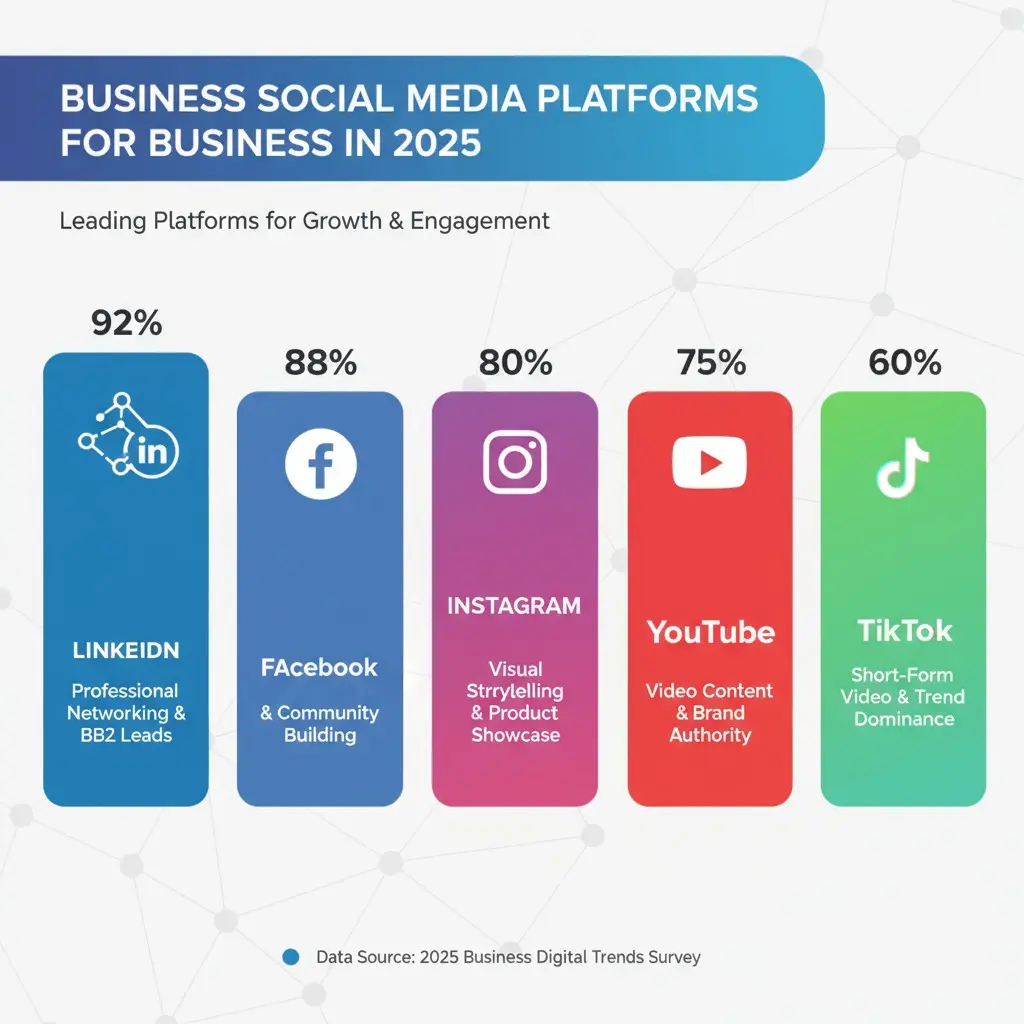
There are many social media platforms out there, but not all of them are right for every business. The key is to choose the ones where your customers spend the most time. Here are the top platforms and why they’re useful:
- Facebook – The All-Rounder Facebook is great for almost any business. You can post updates, run ads, create events, and talk to customers through Messenger. It’s perfect for local businesses, restaurants, shops, and service providers.
- Instagram – The Visual Platform Instagram is all about photos and short videos. If your business looks good on camera — like fashion, food, beauty, or travel — this is the place to be. Reels and Stories are great for getting noticed.
- LinkedIn – The Professional Network LinkedIn is where professionals connect. It’s best for B2B businesses, consultants, agencies, and anyone looking to build authority or reach decision-makers.
- TikTok – The Trend Maker TikTok is perfect for short, creative, and fun videos. It’s a great way to reach younger audiences and even go viral with the right content.
- YouTube – The Video Powerhouse YouTube is the second-largest search engine after Google. Posting tutorials, product demos, or educational videos can help you build trust and bring in long-term traffic.
- Pinterest – The Inspiration Hub Pinterest is where people look for ideas — from recipes to home decor. If you sell lifestyle products, have a blog, or want to drive traffic to your website, Pinterest works really well.
Why Focusing on Your Audience is the Core of Business Success
- In today’s oversaturated digital landscape, the old marketing adage holds truer than ever: “If you try to sell to everyone, you end up selling to no one.” The sheer volume of content, advertisements, and information means that simply shouting your message into the void is no longer an effective strategy. The modern, successful business is not product-centric, but audience-centric. This shift in focus, which moves your marketing efforts from describing your features to solving your customer’s problems, is the single most powerful tool for driving engagement, loyalty, and revenue
- To genuinely focus on your audience, you must move beyond basic demographics like age and location and develop comprehensive Customer Personas. This involves diving into psychographics: what are their primary pain points, what are their deepest aspirations, what content formats do they consume, and which social media platforms do they trust? By answering these questions, you transition from marketing at strangers to having a meaningful conversation with a known individual. This deep understanding allows you to tailor not only your content but the entire customer experience, from your product’s feature set to the tone of your customer service emails
- The resulting benefit of this focused approach is threefold. First, it enables Platform Efficiency. Instead of wasting resources on every social media channel, a precise audience focus tells you exactly where your ideal customers are spending their time—whether it’s the professionals on LinkedIn, the visual shoppers on Instagram, or the trend-followers on TikTok. This ensures every minute and dollar spent on content creation is allocated to the channels with the highest return on investment. Furthermore, understanding the audience’s behavior dictates the type of content: long-form educational videos for a learning audience on YouTube, or quick, witty clips for an attention-deficient audience on Instagram Reels
- Secondly, an audience focus guarantees Content Relevance. Content that speaks directly to a customer’s specific problem—be it an HR manager struggling with recruitment or a homeowner looking for DIY tips—cuts through the digital noise. When a customer feels seen and understood by your brand, the relationship transforms from a transactional exchange into one of partnership and trust. This is the foundation of brand loyalty, which is far more valuable and sustainable than fleeting transactional sales. Relevant content not only earns engagement but also encourages the powerful, free marketing known as word-of-mouth
- Finally, concentrating on the audience leads to significantly Higher Conversion Rates. By crafting personalized calls-to-action (CTAs) that directly address the emotional or practical needs identified in your personas, you simplify the path to purchase. The entire marketing funnel becomes a series of helpful steps tailored to the customer’s journey, making it easy for them to choose you as the best solution. In essence, focusing on your audience ensures that you are not just a business selling a product, but a trusted resource providing genuine value, making it the non-negotiable strategy for long-term growth and market relevance.
Freelance Digital Marketer's Core Social Media Strategy
A freelance digital marketer must treat their own social media presence not merely as a networking tool, but as their primary, live portfolio and proof of expertise. Instead of simply stating skills on a profile, they must consistently publish insightful, value-driven content that actively demonstrates the quality of their work. On LinkedIn, this means sharing detailed case studies and strategic breakdowns of industry trends, directly targeting business owners seeking solutions. On YouTube or TikTok, it means showcasing their ability to create engaging, high-performing content that commands attention and drives action. The goal is to establish immediate trust and authority; if a marketer cannot effectively manage and grow their own channels, clients will logically question their ability to manage theirs. This consistent demonstration of skill turns social platforms into a passive lead generation engine, proving their value before a single proposal is even sent